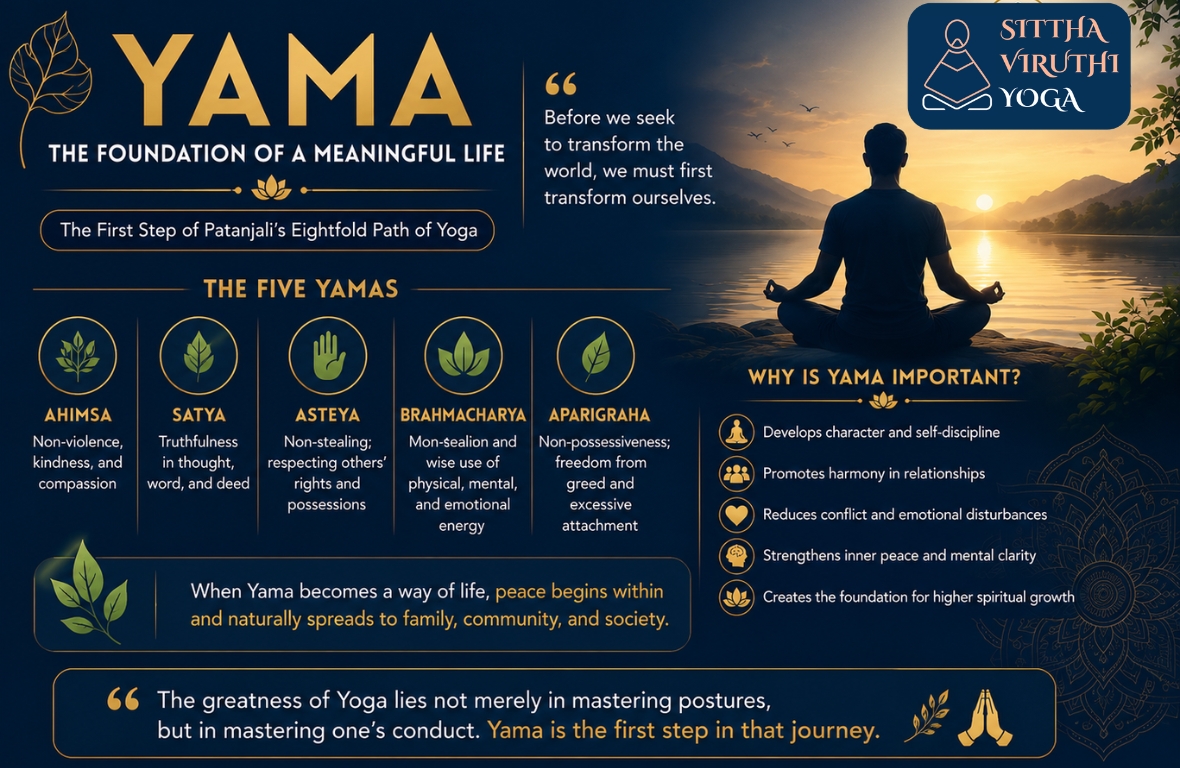
Before we seek to transform the world, we must first transform ourselves.
In the Yoga Sutras, Sage Patanjali presents Yama as the first step of the Eightfold Path of Yoga. Yama forms the ethical foundation upon which a healthy, peaceful, and spiritually enriched life is built.
What is Yama?
The word Yama means self-restraint, moral discipline, and ethical living. It teaches us how to interact with others and the world with awareness, respect, and compassion.
The Five Yamas
- Ahimsa – Non-violence, kindness, and compassion
- Satya – Truthfulness in thought, word, and deed
- Asteya – Non-stealing; respecting others’ rights and possessions
- Brahmacharya – Moderation and wise use of physical, mental, and emotional energy
- Aparigraha – Non-possessiveness; freedom from greed and excessive attachment
Why is Yama Important?
- Develops character and self-discipline
- Promotes harmony in relationships
- Reduces conflict and emotional disturbances
- Strengthens inner peace and mental clarity
- Creates the foundation for higher spiritual growth
Yama in Sittha Viruthi Yoga
At Sittha Viruthi Yoga, Yama is not taught merely as a philosophical concept but is encouraged as a way of daily living.
Through regular yoga practice, meditation, self-reflection, mindful communication, service-minded activities, and conscious living, participants are guided to:
- Cultivate kindness and non-violence (Ahimsa)
- Practice honesty and authenticity (Satya)
- Develop integrity and respect for others (Asteya)
- Use their energies wisely and purposefully (Brahmacharya)
- Live with simplicity, gratitude, and contentment (Aparigraha)
The objective is not perfection but gradual transformation—helping individuals become healthier, happier, more responsible, and spiritually aware members of society.
A Timeless Message
Sage Patanjali regarded the Yamas as universal principles that transcend culture, religion, nationality, and time.
When Yama becomes a way of life, peace begins within and naturally spreads to family, community, and society.Over the coming weeks, we will explore each of the Five Yamas individually and discover practical ways to apply them in our daily lives through the teachings and practices of Sittha Viruthi Yoga.