The Fourth Niyama Svadhyaya (Self-Study)
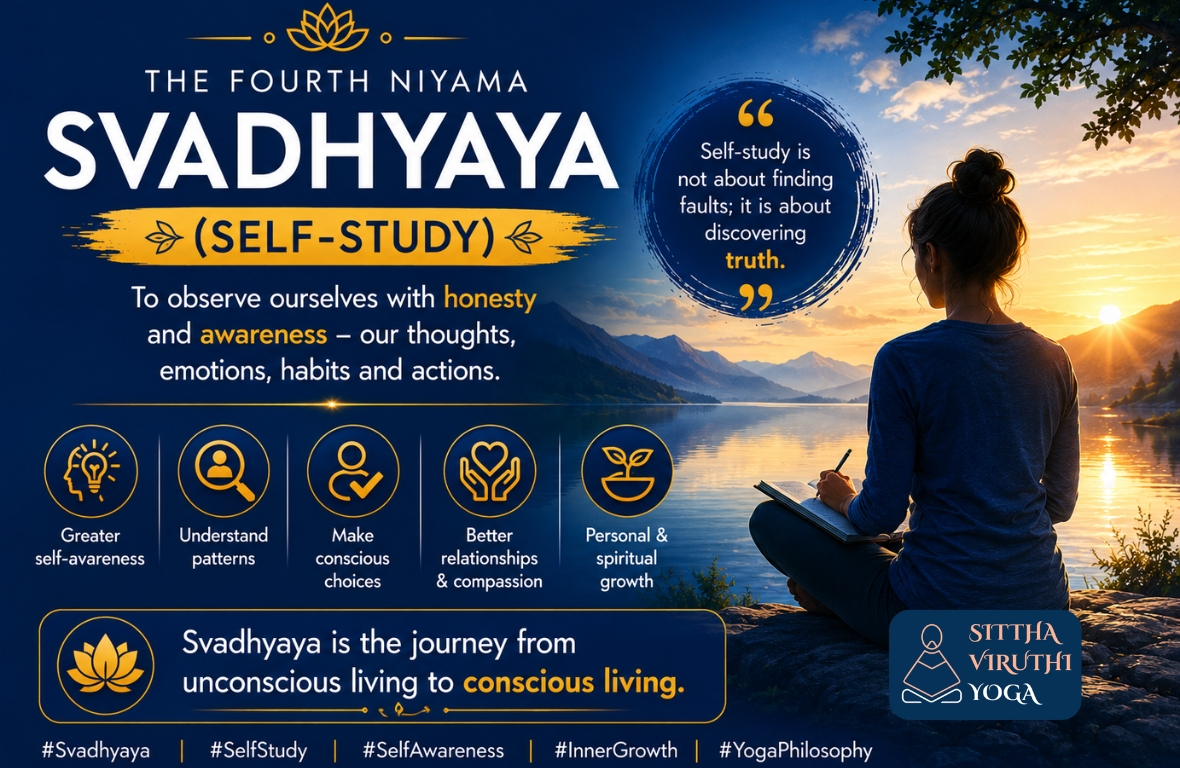
“Self-study is not about finding faults; it is about discovering truth. In the quiet act of observing ourselves, wisdom begins to unfold.” The Yoga Sutras of Patanjali are a timeless guide to understanding the mind and living a balanced, purposeful life. Within this framework, the Niyamas are personal observances that help cultivate discipline and inner growth.
‘Svadhyaya‘ is the Fourth NiyamaThe Sanskrit word ‘Svadhyaya’ is made up of two parts:
- Sva – Self
- Adhyaya – Study or inquiry
Svadhyaya means the study of oneself. It is the practice of observing our thoughts, emotions, habits, reactions, beliefs, and patterns with honesty and awareness.
It is not about judging ourselves. Rather, it is about understanding who we are, why we think and act the way we do, and how we can grow.
Self-study also includes the study of uplifting wisdom through sacred texts, meaningful literature, and teachings that help us gain deeper insight into life and our true nature.
Why is Svadhyaya Important?
Most of our actions are driven by unconscious habits and conditioned responses. Without awareness, we may repeat the same patterns without understanding their impact.
Svadhyaya helps us:
- Recognize our strengths and limitations.
- Understand recurring thoughts and behaviours.
- Develop greater self-awareness.
- Make conscious choices instead of automatic reactions.
- Cultivate personal and spiritual growth.
When we understand ourselves clearly, we can relate to others with greater compassion and wisdom.
Svadhyaya in Everyday Life
Self-study is not limited to meditation or spiritual practice. It can be applied in every aspect of life.
A Student
A student who consistently receives poor results may ask: “Am I studying effectively, or am I distracted and inconsistent?” This honest reflection helps identify the real cause and create positive change.
A Professional
A manager who notices tension within a team may reflect: “Do I communicate clearly? Do I listen to others?” This awareness can improve leadership and relationships.
An Athlete
An athlete may review performance after a competition: “What worked well? What can I improve?” Growth comes from observation and learning rather than self-criticism.
In Personal Relationships
When conflicts arise, instead of blaming others, we can ask: “Why did I react this way? What expectation or emotion was triggered?” Such reflection brings maturity and understanding.
The Practice of Svadhyaya
Simple ways to cultivate Svadhyaya include:
- Maintaining a diary
- Reflecting on daily experiences.
- Observing thoughts without judgment during meditation.
- Reading inspiring spiritual or philosophical texts.
- Asking honest questions about one’s actions and motivations.
- Learning from successes as well as mistakes.
The goal is not perfection, but awareness.
The Essence of Svadhyaya
Svadhyaya is the journey from unconscious living to conscious living. It invites us to become both the observer and the student of our own life.
“ When we understand ourselves deeply, our actions become clearer, our relationships become kinder, and our path becomes more purposeful.
Through‘Svadhyaya, self-knowledge becomes the foundation for transformation