Sahasrara Chakra (Crown Chakra) – Meaning, Benefits & Spiritual Awakening
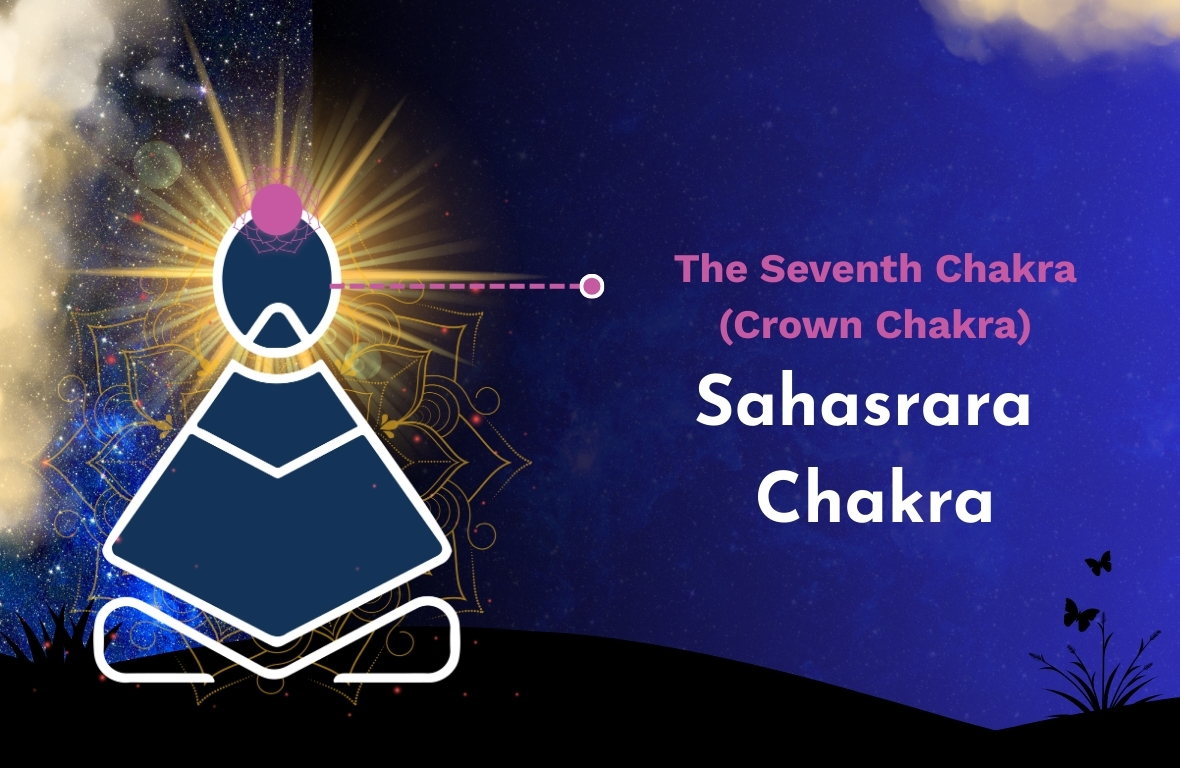
In the classical yogic and Siddha traditions of India, the Seventh Chakra is known as Sahasrara, meaning “Thousand-Petaled”. It is described as the supreme energy center — the seat of pure consciousness, divine illumination, and ultimate liberation (Moksha). While the other six chakras belong to the psycho-energetic system within the subtle body, Sahasrara transcends them all and represents unity with the Absolute.
Meaning and Scriptural Origins
The term Sahasrara (Sanskrit: सहस्रार) means “thousandfold” or “infinite.” It is primarily described in classical Tantric and Yogic scriptures such as:
- Shat-Chakra-Nirupana – A foundational text describing the chakra system in detail.
- Hatha Yoga Pradipika – Discusses Kundalini rising to the crown.
- Yoga Kundalini Upanishad
- Tirumantiram by Sage Tirumoolar, central to Siddha tradition.
- Sat-Chakra-Nirupana
In the Siddha tradition of Tamil Nadu, the Sahasrara is associated with the realization of Siva-Sakti Aikyam — the union of Shiva (pure consciousness) and Shakti (cosmic energy).
Location of Sahasrara
- Situated at the crown of the head (Brahmarandhra).
- Slightly above the physical skull.
- Corresponds anatomically to the region of the pineal gland (as interpreted in modern yogic understanding).
- It is considered beyond the physical body, connecting the individual to cosmic consciousness.
In subtle anatomy:
- It lies above the Ajna Chakra (third eye).
- It is not technically a chakra in the same sense as the lower six; it is the transcendental state beyond energy mechanics.
Symbolism and Structure
Thousand-Petaled Lotus
Sahasrara is symbolized as:
- A lotus with 1000 petals (symbolizing infinite possibilities).
- Violet, white, or golden in color.
- Within it is a luminous bindu (point of pure light).
Each petal represents:
- Sanskrit syllables
- Vibrational frequencies of consciousness
In Tantric iconography:
- The thousand petals are arranged in 20 layers of 50 petals.
- It contains the full spectrum of sound and creation.
Element and Tattva
Unlike the lower chakras associated with elements (earth, water, fire, air, ether), Sahasrara:
- Has no element (Tattva-Atita).
- Represents pure consciousness beyond the five elements.
- Is beyond Prakriti (nature) and Gunas (qualities).
Bija Mantra and Sound
Traditionally:
- Silence itself is the mantra of Sahasrara.
- Sometimes associated with OM (AUM).
- In deep samadhi, even mantra dissolves.
The Siddhas describe this state as: “Nada beyond sound” (Anahata beyond vibration)
Kundalini and Sahasrara
The awakening of Sahasrara happens when Kundalini Shakti rises from the Muladhara chakra through the Sushumna Nadi and unites with Shiva at the crown.
This union is described in:
- Tirumantiram
- Shiva Samhita
When Kundalini reaches Sahasrara:
- Duality dissolves.
- Ego (Ahamkara) ceases.
- The practitioner experiences Nirvikalpa Samadhi.
- The nectar called Amrita begins to flow downward.
Amrita – The Divine Nectar
Sahasrara is the seat of:
- Soma
- Amrita (nectar of immortality)
In Siddha literature:
- This nectar drips down through the subtle body.
- Advanced yogis preserve it through Kechari Mudra.
- It rejuvenates cells and grants spiritual radiance (Tejas).
Psychological and Spiritual Significance
When Sahasrara is awakened:
Positive Qualities
- Enlightenment
- Divine wisdom
- Unity consciousness
- Bliss (Ananda)
- Freedom from fear of death
- Deep compassion
- Non-attachment
Imbalance (in modern interpretations)
- Spiritual disconnection
- Existential confusion
- Lack of purpose
- Chronic material fixation
However, traditional texts rarely discuss “blockage” — they focus on preparedness and purification.
Sahasrara in Siddha Tradition
Tamil Siddhas describe Sahasrara as:
- “Param Jyoti” (Supreme Light)
- “Thousand-petaled white lotus”
- The abode of Siva
In Tirumantiram, Tirumoolar states that when Prana merges in the crown:
- The yogi becomes deathless in consciousness.
- Mind dissolves into Suddha Siva.
- The body becomes a temple of light.
Siddha Yoga emphasizes:
- Breath mastery (Vasi Yoga)
- Nadi purification
- Guru initiation
- Moral discipline (Yama, Niyama)
Sahasrara and Samadhi States
Associated states include:
- Savikalpa Samadhi
- Nirvikalpa Samadhi
- Sahaja Samadhi (effortless state)
Described in Patanjali Yoga Sutras as the culmination of Ashtanga Yoga.
Scientific Correlations (Modern Interpretations)
Modern yogic researchers associate Sahasrara with:
- Pineal gland regulation
- Higher brain cortex activity
- Gamma brainwave states
- Expanded states of awareness
However, these are correlations — not classical scriptural claims.
Practices to Awaken Sahasrara (Traditional Approach)
Important: Classical texts warn against premature stimulation.
Preparatory Steps:
- Yama & Niyama
- Asana stability
- Pranayama
- Bandhas
- Mudras (especially Kechari)
- Meditation on Ajna first
Only through purified Sushumna Nadi can Kundalini rise safely.
Ultimate Significance
Sahasrara represents:
- The end of individuality.
- The realization: Aham Brahmasmi (I am Brahman).
- Freedom from Karma cycle.
- Union of Jivatma and Paramatma.
It is not merely a chakra — It is the gateway to liberation.
Concluding Insight for Sittha Viruthi Yoga
In the Siddha understanding, Sahasrara is not a concept to be intellectually studied alone. It is:
- A lived realization.
- A transmission from Guru to disciple.
- The flowering of disciplined inner alchemy.
When Kundalini unites with Shiva at Sahasrara: The yogi does not become powerful. The yogi dissolves into the Infinite.