Sage Patanjali’s Yoga Sutras, Significance of “ Niyama”
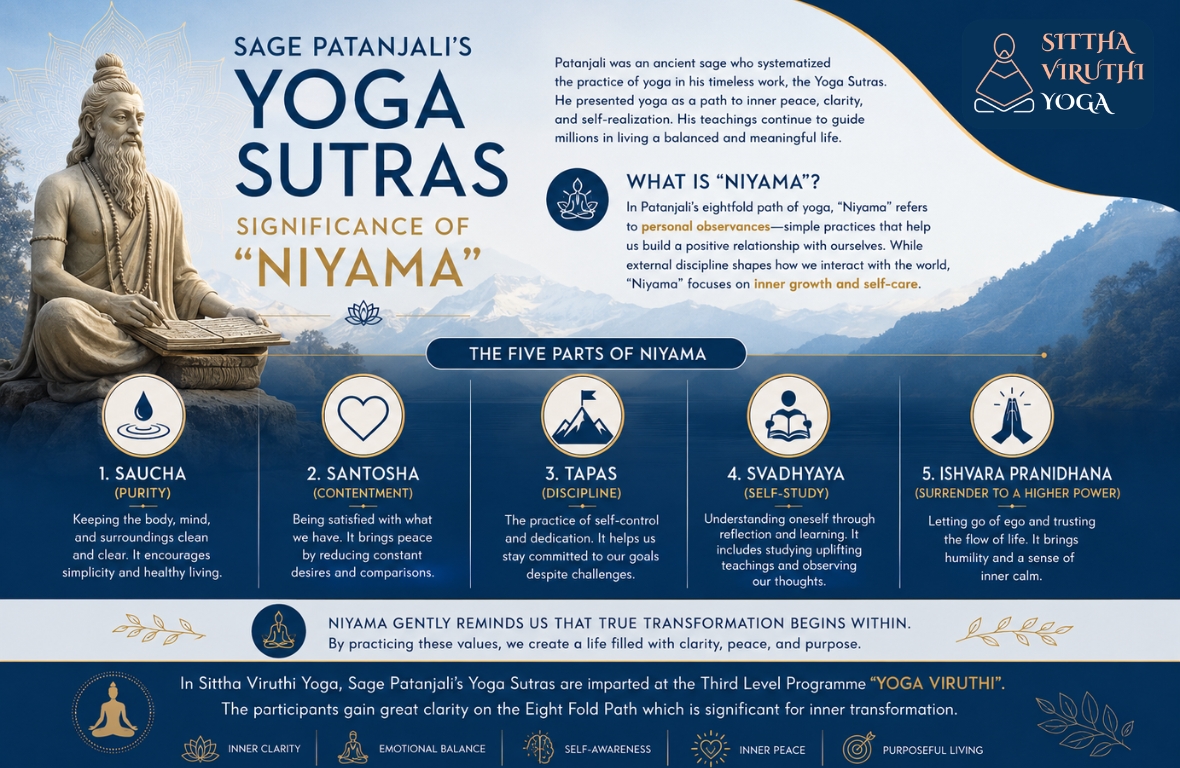
Patanjali was an ancient sage who systematized the practice of yoga in his timeless work, the Yoga Sutras .He presented yoga as a path to inner peace, clarity, and self-realization. His teachings continue to guide millions in living a balanced and meaningful life.
What is “Niyama”?
In Patanjali’s eightfold path of yoga , “Niyama “ refers to personal observances—simple practices that help us build a positive relationship with ourselves. While external discipline shapes how we interact with the world, “Niyama” focuses on inner growth and self-care
The Five Parts of Niyama
Saucha (Purity)
Keeping the body, mind, and surroundings clean and clear. It encourages simplicity and healthy living.
Santosha (Contentment)
Being satisfied with what we have. It brings peace by reducing constant desires and comparisons.
Tapas (Discipline)
The practice of self-control and dedication. It helps us stay committed to our goals despite challenges.
Svadhyaya (Self-study)
Understanding oneself through reflection and learning. It includes studying uplifting teachings and observing our thoughts.
Ishvara Pranidhana (Surrender to a Higher Power)
Letting go of ego and trusting the flow of life. It brings humility and a sense of inner calm.
Niyama gently reminds us that true transformation begins within. By practicing these values, we create a life filled with clarity, peace, and purpose. In Sittha Viruthi Yoga , Sage Patanjali’s Yoga Sutras are imparted at the Third Level Programme “ Yoga Viruthi “ . The participants gain great clarity on the Eigtht Fold Path which is significant for inner transformation.