Right Livelihood (Sammā Ājīva)
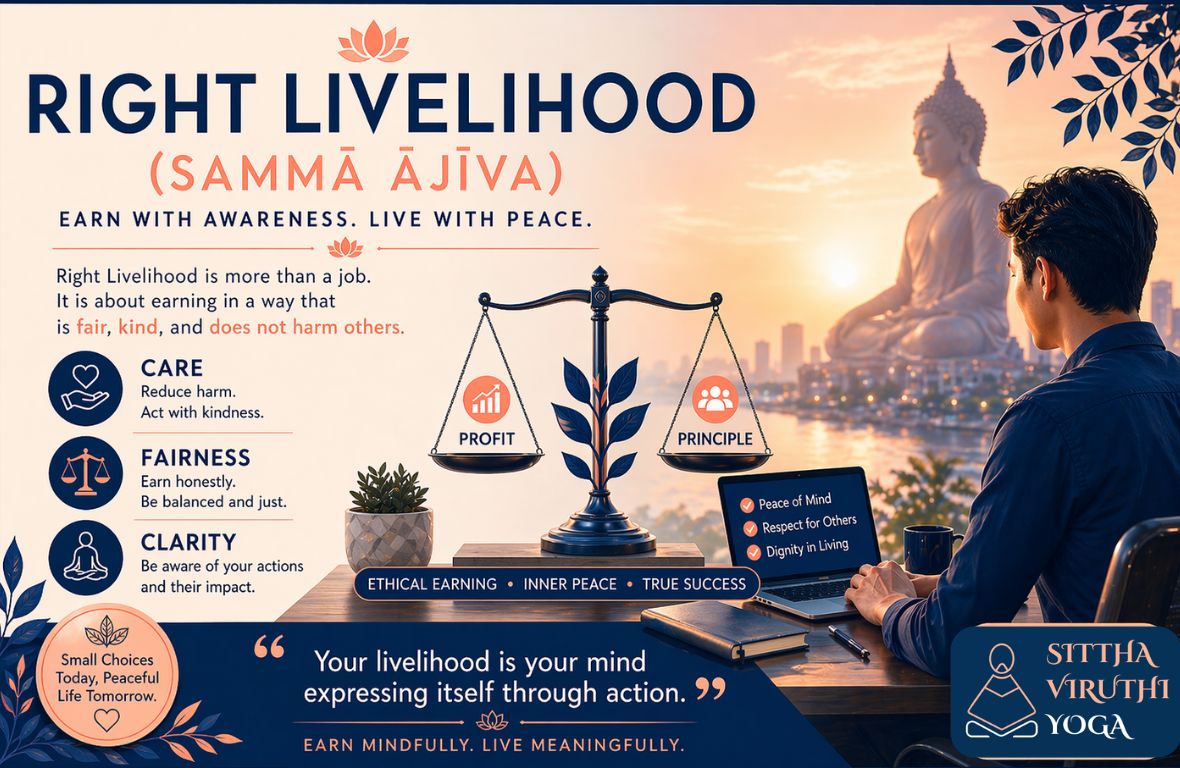
Right Livelihood (Sammā Ājīva) — A Compassionate, Practical Guide for Modern Life. Right Livelihood is often described simply as: “Earn in a way that does not harm others.” That is true—but it is only the beginning. In the deeper teaching of Gautama Buddha, especially when understood through the Abhidhamma, Right Livelihood is not just about what we do. It is about the state of mind with which we live, earn, and use what we earn. This understanding does not judge us. It gently invites us to observe, understand, and grow.
1. The Real Question Behind Livelihood
Most of us think: “Is my job right or wrong?” But a deeper and more helpful question is: “What is happening in my mind while I earn?” Because two people can do the same job:
- One feels peaceful
- Another feels restless
- The difference is not the job
- The difference is the inner experience
2. Understanding Through Everyday Life
When Earning Becomes Never Enough:
- I need more.
- This is not sufficient.
- Others are ahead of me.
A landlord increases rent far beyond what is fair just because demand is high.
Outwardly: Income increases
Inwardly: Subtle pressure and dissatisfaction continue
Even after gaining more: The mind does not settle
When Earning Ignores Others- Speaking harshly
- Taking advantage of someone’s difficulty
- Making decisions without considering impact
Charging very high interest to someone already struggling financially.
Outwardly: Money comes in
Inwardly: Emotional heaviness, hidden discomfort
When Earning Happens Without Awareness- This is how everyone does it
- Why think too much?
Continuing certain practices without ever questioning if they are fair or necessary.
Outwardly: Life looks normal
Inwardly: Lack of clarity, Living mechanically
3. What Makes Livelihood Right?
Right Livelihood is not about perfection. It is about slowly growing three qualities:
Contentment : Learning to feel enough with what is earned fairly.
Care : Being mindful not to cause unnecessary harm.
Clarity : Understanding our actions and their effects.
These bring:
- Calmness
- Dignity
- Inner stability
4. Practical Guidance from the Buddha
At this point, it is important to reflect with kindness. Many people are in their current livelihoods because of:
- Responsibilities
- Financial Needs
- Family Situations
- Limited Opportunities
So let this be clearly understood: You are not a bad person. You are a human being in a situation. Right Livelihood is not about blaming ourselves. It is about moving forward with awareness
5. A Compassionate Path Forward
If you feel your current livelihood is not fully aligned, there is no need for guilt. There is a gradual and wise way forward:
Step 1: AwarenessNotice your inner experience during work—without judging yourself
Step 2: Reduce HarmWhere possible, act with more fairness and care
Step 3: Refine IntentionShift from:
- Only profit matters” to
- Let me earn in a way I can respect
Look for better alternatives without pressure
Step 5: Transition WiselyMove when the conditions are right—not suddenly, but steadily
6. Right Livelihood in Today’s Financial Life
In modern life, income is not only from jobs. It also comes from:
- Interest
- Rent
- Inherited Property
Let us understand these with clarity and balance.
Interest and Rental IncomeEarning through rent or interest is part of life. The deeper question is: Is it fair, or does it take advantage of others?
For example:- Charging reasonable rent → supports both sides
- Charging excessively because you can → may create imbalance
- Moderate interest → can be acceptable
- Very high interest on someone in distress → can increase suffering
- So the reflection is not: Is this allowed or not?” But: “Is this fair, balanced, and humane?
A Beautiful Responsibility Sometimes we receive property or wealth from parents or ancestors. This can be accepted with gratitude. At the same time, a gentle understanding can arise: “This was not earned by me—it came through others” This understanding does not reduce its value. Instead, it opens a beautiful possibility:
Using Wealth for GoodSuch wealth can become an opportunity to:
- Help Others
- Support Meaningful Causes
- Practice Generosity (dāna)
Even using a small portion this way can bring:
- Deep Satisfaction
- Inner Lightness
Not as a duty—but as a natural expression of gratitude
7. A Simple Illustration
Two people earn the same income: Person A: Constant comparison, endless wanting. Person B: Honest effort, contentment. Same money Completely different inner life Because: Livelihood is not about how much we earn It is about how it shapes our mind
8. Right Livelihood as Daily Practice
Right Livelihood is not decided once. It is practiced every day:
- When gain comes → can I stay balanced?
- When loss comes → can I remain steady?
- When dealing with others → can I act with care?
Your work becomes: A place of inner training
Final Insight
In the deepest sense: Your livelihood is your mind expressing itself through action So change begins not outside—but within:
- In Awareness
- In Intention
- In Small Daily Choices
Final Reflection
At the end of the day, gently ask:
- Did my work bring peace or pressure to my mind?
- Did my actions today reduce or increase suffering?
- Was I aware—or simply reacting?
When approached this way: Livelihood is no longer just a way to earn It becomes a path of understanding, balance, and quiet inner growth