Ajna Chakra (Third Eye Chakra) – Meaning, Benefits & Healing Techniques
Ajna Chakra (आज्ञा चक्र) is the sixth major energy centre (chakra) in the traditional yogic and subtle anatomy systems of India. It is widely known as the Third Eye Chakra or “Eye of Intuition.” The Sanskrit word Ājna literally means “command,” “to perceive,” “to know,” or “authority.” This hints at its role as the seat of inner wisdom and higher cognition.
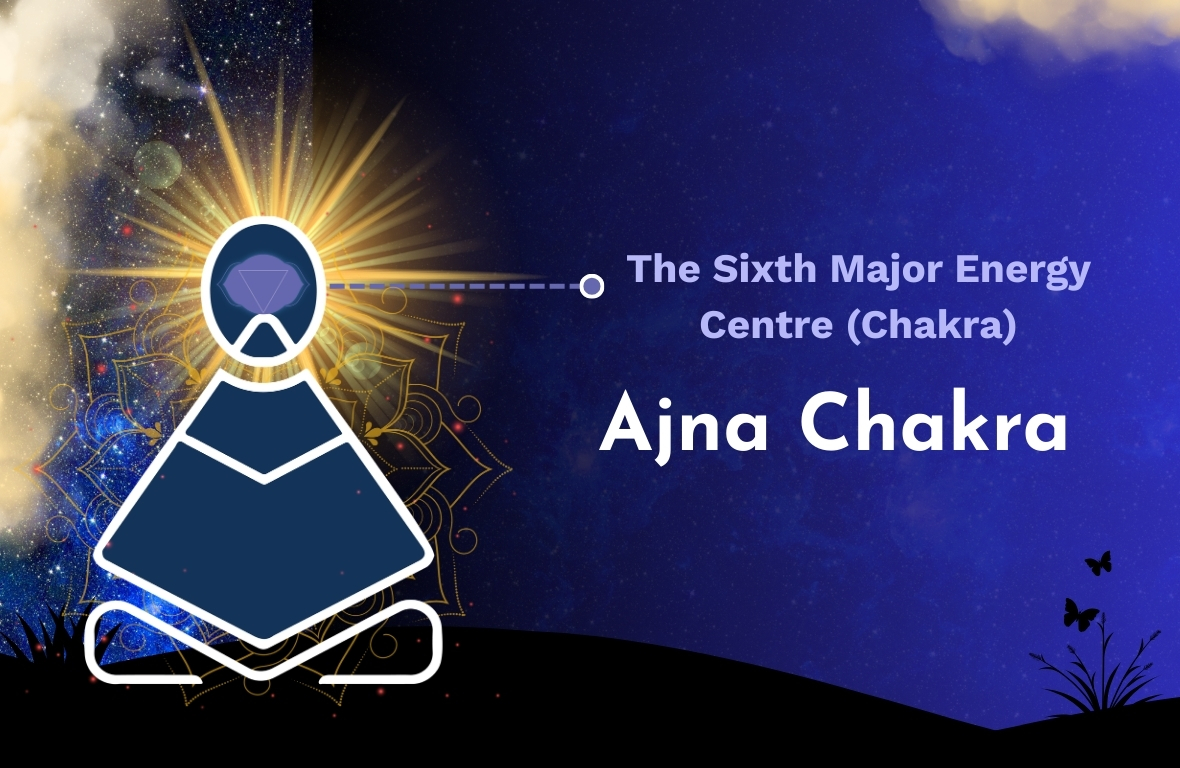
Location — Physical & Subtle
- Subtle Location: Between the eyebrows in the centre of the forehead in the subtle (pranic) body — called Bhrumadhya (“between the eyebrows”).
- Energetic Anatomy: According to classical yogic texts like Shat-Chakra-Nirupana and Śiva Samhita, the chakra’s subtle lotus resides at the midline of the head where the three principal nadis (energy channels) — Idā, Piṅgalā, and Suṣumnā — converge. This point unifies duality into unified perception.
- Correspondence with Anatomy: Many yogic commentaries correlate Ajna with the pineal gland and pituitary — subtle seats of intuitive awareness and neuroendocrine regulation.
Symbolism & Appearance
- Lotus: A lotus with two petals — symbolic of the dual channels Ida (mental/polar feminine) and Pingala (solar/action masculine) converging in perception.
- Seed Mantra (Bīja): ॐ (AUM) — the primal universal sound and the seed of all vibration.
- Color: Indigo or deep blue/violet — the hue of deep inner vision.
- Yantra: Often depicted with an inverted triangle inside the lotus, representing the inner world and transcendent insight.
Core Functions & Importance
The Ajna Chakra, also known as the Third Eye Chakra, is the sixth energy center in the chakra system. It is located between the eyebrows and is the seat of intuition, wisdom, perception, and higher awareness.
Higher Mind & Intuition
Ajna governs intuition, inner vision, deep insight, and the unitive aspect of consciousness — the ability to perceive reality beyond sensory data into fundamental truth. It is where the mind transcends dualistic thinking and unifies perception with awareness.
Seat of Conscious Intelligence
Unlike lower chakras that coordinate physical and emotional processes, Ajna is associated with the mind (Manas) itself, transcending thought to pure knowing — sometimes described as wisdom beyond intellect.
Integration of Ida and Pingala
Here the two opposing subtle forces — often represented as lunar and solar currents — harmonize within the central Suṣumnā, signifying the reconciliation of polarity (subject-object, male-female) and a non-dual perception.
Gateway to Higher Consciousness
Classical tantric texts emphasise that true meditation and inner awakening are signified by steadying Ajna. When prāṇa (life energy) rises into this centre, the yogi’s awareness pierces subjective illusions and approaches Samādhi (pure consciousness).
Psychological & Spiritual Attributes
When Ajna is balanced and open, a person experiences:
- Clear perception and inner guidance
- Strong intuition and deep insight
- Emotional detachment and non-reactivity
- Visionary imagination and creative intelligence
- Ability to discern truth beyond the sensory world
When blocked or imbalanced, typical signs described in yoga literature include:
- Difficulty concentrating and poor clarity
- Overactive thinking with little inner awareness
- Emotional confusion or indifference
- Sensory distractions that cloud wisdom
Role in Meditation & Yoga Practices
The Ajna Chakra is central in many yogic practices aimed at awakening higher consciousness:
Meditation
Focus on the space between the eyebrows (Bhrumadhya) while chanting the mantra OM helps align inner awareness and stabilise the mind.
Pranayama
Techniques that balance the breath — especially alternate nostril breathing (Nadi Shodhana) — help regulate Ida, Pingala, and enhance harmony at
Dhāraṇā (Focused Awareness)
Sustained one-pointed attention on Ajna cultivates deep insight and mental stability, foundational for deeper meditation (Dhyāna).
Philosophical & Traditional Perspective
In many yogic-tantric frameworks:
- Ajna is sometimes described as “Mukta-Trivena” — the liberated confluence of the three vital currents (Ida, Pingala, Suṣumnā).
- It is often considered the command centre that allows the yogi to abide in pure consciousness — where scriptures and lived experience merge into direct insight.
- In the path of Kundalini, rising into Ajna indicates the transformation of the conditioned self into pure awareness.
Why Ajna Often Called “Third Eye”
The term Third Eye vividly captures the essence of Ajna:
not a physical eye, but an inner lens of truth that “sees” what the physical senses cannot — intuition, Dharma (right action), and direct knowing. The common cultural practice of placing a tilak or bindi at the brow centre symbolises enhancing this inner focus and retaining subtle energy.